A well-run group invests in skill, approach, and healing. The missing piece, too often uncovered on a cold sideline with a player gasping or a knee swelling under a sock, is first aid that matches the realities of sporting activity. Generic training helps, yet contact sporting activities, endurance occasions, and young people leagues each bring patterns of injury and decision pressure that demand tailored prep work. When a train, team manager, or volunteer finishes a first aid course developed for athletic atmospheres, the difference displays in small, efficient steps that prevent a strain from coming to be a season-ending tear and, in unusual moments, in mins that conserve a life.
Why common training falls short on the sideline
Traditional first aid training covers the fundamentals: scene security, calling emergency situation services, bleeding control, cracks, CPR, and basic clinical emergencies. Those structures issue. Yet sport transforms the formula. Injuries occur in clusters, moving, and before a group. The field may be muddy. The storage locker area might be the only personal area. A player may insist they are fine while adrenaline masks signs. Time stress misshapes judgment, and substitution rules or event layouts subtly affect decisions that need to stay clinical.
Tailored first aid and CPR training for sports teams adjusts strategies to the athletic context. Product packaging, storage, and quick-grab kit format differ due to the fact that the responder is frequently sprinting to the case. Evaluation focuses on systems common to the sporting activity handy, like valgus stress in football knees or axial loading in rugby neck injuries. Communication drills include taking care of colleagues, authorities, and parents. Documentation techniques anticipate organization review and insurance policy queries. These are not tiny tweaks. Over the course of a period, they minimize missed time, secondary injuries, and chaos.
What a sport-specific course must cover
A solid first aid course for teams improves core protocols and afterwards layers on components that mirror the rhythms and risks of training and competition. When I design or evaluate such training, I try to find three anchors: realism, choice method under pressure, and evidence-based content updated for existing sport medicine consensus.
Realism suggests circumstances on a field or court, wearing handwear covers with cold fingers, occasionally in low light. The best cpr training will certainly not just educate compressions on a clean class manikin, it will practice bringing an AED through a congested bench, clipping a jacket, and reducing gear when seconds matter.
Decision practice appears like timed drills where a train triages 2 simultaneous issues, possibly a shoulder misplacement on one sideline and a head knock in midfield. It also consists of the unpleasant option to draw a star athlete for more evaluation. Wedding rehearsal aids vaccinate versus wishful thinking.
Evidence-based material modifications every year. Blast removal-from-play requirements now highlight progressing signs and symptoms and noticeable ataxia. Heat illness methods stress cool water immersion as first-line treatment for exertional warm stroke. Back board methods have actually moved towards first aid courses Gympie minimizing unnecessary immobilization while maintaining rigorous control in high-risk devices. A good supplier updates courses and supplies a cpr refresher course that incorporates these adjustments without overwhelming volunteers.
The actual injury patterns by sport and season
Not all sporting activities injure professional athletes the same way. The most efficient first aid courses mirror what groups really deal with, not a generic buffet. Throughout young people, amateur, and semi-professional levels, a couple of patterns repeat.
Collision and get in touch with sporting activities, like rugby and Football, bring head and neck injuries, shoulder dislocations, AC joint sprains, rib injury, and lacerations around the scalp and face. Training must show quick headgear and pad gain access to without tugging the cervical back, bleeding control near hairlines, and sternum rub look for responsiveness without sloppy handling. In these contexts, an AED within 3 mins' reach is non-negotiable.
Field and court sports with fast cutting, such as soccer, basketball, and netball, present ankle joint strains, ACL tears, hamstring muscle pressures, and contusions from kicks or drops. The difference between a two-week sprain and a six-week trouble can depend upon instant choices: quit play, compress effectively, stay clear of over-icing, and maintain the joint reasonably raised without strangling blood circulation. First aid and CPR courses for these teams should hang out on hands-on tendon stress and anxiety testing, risk-free sideline re-warm-ups, and conventional return-to-play criteria.
Endurance sporting activities, from cross-country to roadway cycling, share dehydration dangers, hyponatremia in lengthy races, warm aches, and occasional exertional warm stroke. The right choice under a summer season sunlight is typically counterintuitive. A runner startling with a high core temperature requires energetic cooling initially, transport secondly. A customized first aid training block that drills "cool first, then transportation" and shows precisely just how to establish a bathtub or tarp-based immersion can save a life.
Ice and snowsports present wrist fractures from falls on outstretched hands, shoulder injuries, facial lacerations, hypothermia, and concussion. The training course ought to teach quick rewarming principles, glove-compatible dressing strategies, and communication for wide, cool venues where EMS arrival can be delayed.
Martial arts and wrestling groups need guideline on nosebleeds that will not stop, auricular hematomas, finger and toe dislocations, and risk-free acknowledgment of concussive signs in athletes inclined to downplay them. Also, clear return procedures that value event timing and weigh-in schedules must be covered.
These information matter. When a fitness instructor grabs the right dressing, or when a supervisor acknowledges a stinger versus a red-flag cervical issue, it is due to the fact that the training mirrored the sport's landscape.
Building the right first aid kit for a team
Kits fall short groups in two predictable means: bloat and shortage. I have actually opened up bags the dimension of carry-on bags filled with things that never ever see daytime, and I have actually seen kits the size of a lunchbox missing fundamental tape and gloves. Excellent programs do not just checklist materials, they teach why specific items make their location and exactly how to configure a two-tier system: a grab set for instant action and a bench package for extended care.
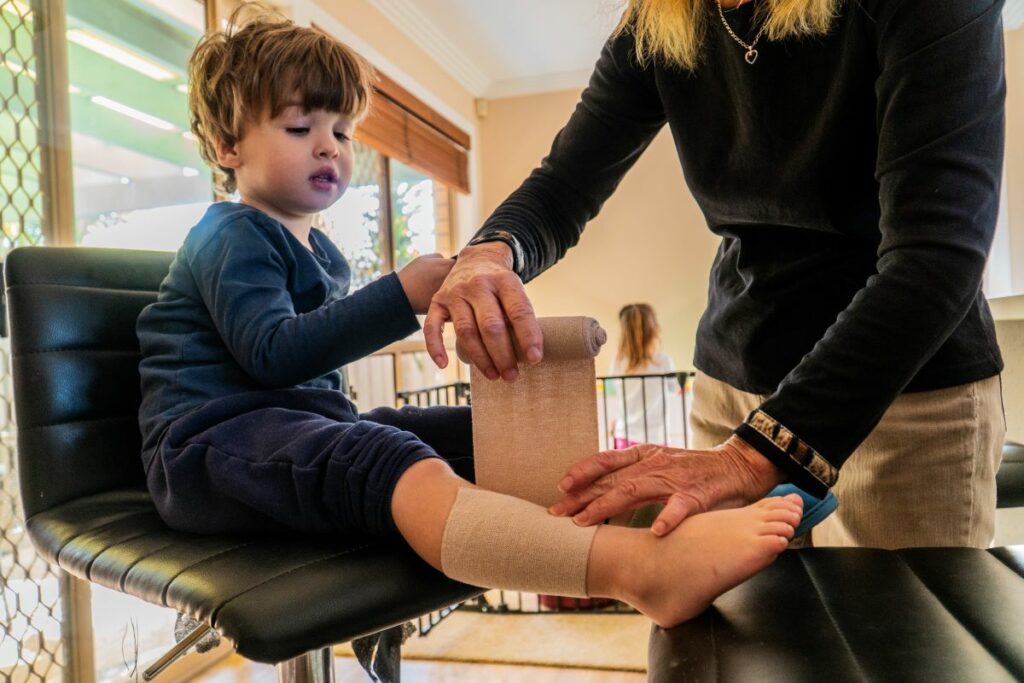
The grab kit need to ride with the first -responder at training and games. It requires barrier defense, a handful of hemostatic gauze options or at the very least effective dressings, a pocket mask, instantaneous ice bags that really turn on, natural plaster for compression, a tiny roll of sports tape, injury shears, a glucose source, and the AED where policy allows. A training course worth its charge will certainly pierce in-the-dark pulls so you can grab the appropriate bag by feel.
The bench package or sideline trunk can hold restocking products, bigger splints, slings, extra ice covers, an infrared thermostat, sore treatment, and a portable respiratory tract adjunct established if your range and neighborhood laws allow. Consumables often tend to run out at competitions, not midweek practice, so training courses ought to train managers on pre-event checks. Expiration days on AED pads and batteries deserve a line on the group schedule, not a sticky note that dies in the rain.
Sideline analysis that works when adrenaline lies
Athletes are educated to push pain apart. That complicates assessment, specifically in the mins after a crash or error. A solid first aid and CPR course for groups instructs flow that resists the urge to chase the noticeable injury first.
- Primary survey: ensure the airway is clear, inspect breathing and circulation, try to find extreme blood loss. The most basic respiratory tract concerns respond to whether you are taking care of life risk or a musculoskeletal problem with a ticking clock rather than a siren. Cervical spinal column considerations: if the mechanism suggests axial load, high-speed turning, or a high-impact crash with head involvement, hold hands-on stablizing and avoid unneeded activity. Method handoffs, so an additional staffer can take over stablizing if needed. Neurological quick check: orientation concerns, smooth pursuit eye tracking when ideal, and fast arm or leg toughness checks. Subtle crookedness reveal more than a brave smile. Secondary survey: palpate bony landmarks, examination for ligament laxity with care, and compare bilaterally. When in doubt, incapacitate and get rid of from play, then intensify to clinical evaluation.
These steps sound basic theoretically. Under wind, shouting, and a running clock, they become practices only if educated repetitively. That is why a first aid course created for sports cooks in other words, reasonable drills: twenty secs to establish control, sixty secs to find life dangers, three minutes to decide play or pull.
Concussion protocols that stand up under pressure
No group intends to be the one that let a concussed athlete use. The threat to long-term mind wellness is not academic. Yet the pressure originates from all sides, particularly in elimination events. A strong training course places steel in the spine of the person making the call and gives them straightforward, defensible triggers to eliminate an athlete.
Red flags consist of loss of awareness, visible disorientation, postponed spoken reactions, equilibrium problems, duplicated vomiting, extreme or worsening frustration, seizure-like activity, or any type of neck pain with neurological signs. Immediate elimination from play is the only right response to any one of these signs.
Just as crucial are the next actions. Quiet monitoring far from sound, out the bench. No same-day return when trauma is thought, regardless of symptom renovation. Timely recommendation for medical assessment. A graded return-to-play protocol with a minimum of 24 hr in between stages, customized to the professional athlete's signs and regional guidelines. The best first aid and cpr courses educate team how to record what they saw, the choices made, and who was informed. That paper trail protects the professional athlete initially and the program second.
Breathing and the heart: when seconds matter
Two emergency situations overshadow all others in sporting activity: unexpected heart attack and respiratory tract concession. Luckily, both have clear, practiced reactions that save lives when carried out fast.
Sudden cardiac arrest in professional athletes is unusual, yet it happens across ages and sports, usually without prior caution. A broke down athlete who is less competent and not breathing normally requires CPR right away. Efficient cpr training for sports teams reduces the pause between collapse and the initial compression to much less than a min when possible. It additionally ensures an AED is within quick reach which staff know precisely where it is, exactly how to access it previous spectators, and how to affix pads on a perspiring chest.
Airway compromise arises from face injury, oral injuries, or swelling. Programs must CPR plus first aid certification course cover jaw thrust in presumed cervical involvement, efficient use a pocket mask, and the limitations of onlooker care. In my experience, the teams that rehearse these abilities every season compress quicker, shock previously, and interact with EMS more effectively. That is the difference that a good cpr course develops, especially when freshened every 6 to twelve month with a quick cpr correspondence course to combat skill decay.
Heat, cold, and hydration: the environmental triad
Across climates, 3 environmental stress factors make up many avoidable emergency situations: warmth ailment, hypothermia, and hydration mismanagement. Each needs various impulses than a standard facility visit.

Exertional warmth stroke is a medical emergency defined by central nerves disorder and elevated core temperature level from extreme task. No quantity of sips and color will repair it quickly sufficient. The concern is rapid cooling, preferably chilly water immersion up to the neck. If a tub is not feasible, tarp-assisted air conditioning with aggressive ice water dousing jobs. Transport after cooling is safer than transport without cooling when the professional athlete is still alarmingly hot. In an efficient sports-focused first aid course, trainees set up and run these stations as component of the curriculum.
Hypothermia slips up during winter methods, chilly rain, or expanded bench time after an injury. The fix is controlled rewarming, dry layers, cozy wonderful beverages if the professional athlete looks out, and gentle managing to prevent arrhythmias in moderate to extreme situations. Groups take advantage of a silent, sheltered room with coverings and a plan for shuttling players inside your home throughout long stoppages.
Hydration is not just extra water. In long-duration events, overhydration can lead to hyponatremia, a harmful dilution of sodium. Programs ought to educate indications that separate dehydration headache from the confusion and nausea or vomiting that recommend hyponatremia. Practical guidance matters below: electrolyte schedule, pre-event weigh-ins to lead customized strategies, and post-event checks where severe swings trigger more evaluation.
Splinting, taping, and understanding when to stop
Sideline care usually rests on stabilizing an injury well enough for risk-free transport and protecting against professional athletes from making a minor injury worse. Good courses show minimalist splinting that first aid training in Gympie uses what you have: a SAM splint formed and cushioned properly, a stiff shin guard as a short-term support, or a jacket as a sling in a pinch. They also clarify range. Insulation can sustain a stable ankle joint that has actually been evaluated, but it must not mask instability simply to keep a player on the field.
This is where experience matters. An athlete with a new shoulder misplacement must not return that day, also if reduction achieves success in a professional setup later on. A recurrent patellar subluxation with quick sign resolution might still demand traditional rest despite a national championship on the line. An instructor who finished a comprehensive first aid course finds out to connect these limits plainly and calmly, avoiding the bargaining that weakens care.

Documentation, communication, and the chain of care
Once the blood loss stops and the professional athlete is safe, the task is refrained from doing. What you jot down and that you tell shape recuperation and responsibility. A solid first aid training program consists of simple, repeatable documents templates: day and time, system of injury, symptoms and signs, actions taken, choices made, and references. Keep copies safe and secure yet accessible. After significant events, notify organization authorities per plan and inform the family with truths, not speculation.
Communication likewise means mapping the chain of care beforehand. Which immediate care or center understands your team and can see professional athletes on brief notice? Which physio therapist collaborates with your schedule? What is the on-call number for the local sports medication medical professional? When those relationships exist, you will not be left looking for assistance on a Sunday afternoon.
Choosing the appropriate service provider and program format
Not every first aid and cpr course fits a sporting activities group. Try to find programs that show area experience, not just classroom polish. A provider like First Aid Pro or equivalent organizations that concentrate on used setups can tailor circumstances to your sporting activity and degree. Request references from other clubs in your region. Verify that the course concerns an identified first aid certificate that pleases your organization and place requirements.
Course formats differ. A combined technique works well for hectic groups: self-paced online theory complied with by a hands-on session on your real field or court. Short, high-frequency refresher courses keep abilities sharper than a solitary long course every year. When spending plans allow, set up a preseason cpr courses obstruct for all personnel, then midseason scenario refreshers that focus on the injuries you have in fact seen.
Youth teams and the moms and dad factor
Youth sports add two layers: moms and dads and development. Moms and dads might be initially on scene during practice, which can aid or hinder depending upon their training and personality. A smart club supplies brief, open evenings to walk family members via the fundamentals: recognizing blast warnings, why particular injuries suggest no debate concerning return, how to help without crowding. Clear sideline duties reduce the mayhem that can overwhelm a hurt child.
Developmentally, teens are not tiny grownups. Development plates complicate fracture patterns. Heat disease appears faster in more youthful professional athletes, especially in humid environments. Instructors and volunteers need to choose first aid courses that call out pediatric distinctions, from medication methods to psychological first aid that calms a scared player.
A season-long plan beats a one-off class
Treat first aid like conditioning: constant, progressive, and tied to the calendar. Preseason is the moment for a full first aid and cpr course, AED checks, set restocking, and venue risk walk-throughs. Early period results will certainly appear patterns. Possibly ankle strains gather on a certain lawn seam or a details workout drill leaves hamstrings tight. Midseason, run a concentrated refresher around those searchings for. Prior to events, tighten up procedures for hydration, recovery, and warmth administration. After any severe incident, perform a no-blame review to improve procedures.
The groups that do this well construct a competence that gamers depend on. They report signs and symptoms previously due to the fact that they recognize they will be listened to. They return to play safer and usually earlier because care is systematic throughout the chain: sideline to center to rehab to training.
What customized training resembles on the ground
A club rugby trainer I dealt with had a scare 2 seasons back. A prop broken down after a ruck, mindful however confused, after that quickly unresponsive. Sideline staff began CPR within 45 seconds. The AED showed up from the club in under 2 minutes since it resided in a bright, authorized closet near the field gateway. One shock, after that compressions. EMS came to 6 minutes. The player made a full recuperation after a cardiac workup disclosed an electric issue. The last piece of that story matters: the group's cpr training had actually consisted of sprint drills to obtain and run the AED. Without that technique, mins would certainly have leaked away.
A senior high school football program I suggest had a various challenge: a cluster of side ankle joint strains maintained 2 starters out for several weeks. After a customized first aid course that highlighted prompt compression approaches and risk testing, the group shifted to on-field flexible compression within 2 minutes of injury and presented equilibrium drills into workouts. Sprain extent and time shed stopped by roughly a third over the remainder of the season. No heroics, simply method used consistently.
Costs, compromises, and making it stick
Budgets are actual. So are volunteer time limits. An extensive first aid and cpr course with sport-specific components sets you back more than a generic class, and it demands hours you might spend on drills. The return shows up in less emergency transportations, less lost time, and quieter sidelines. If funds are limited, prioritize high-impact elements:
- Ensure a minimum of two personnel per team hold a present first aid certificate with cpr training and AED use. Run one on-field circumstance session per season, even if quick, to practice genuine logistics. Place an AED where feedback time is under three minutes from any kind of playing location, and track pad and battery expiry. Adopt a written blast and heat plan, and train team to apply it without exception. Keep a lean, efficient grab kit and restock after every video game day.
This list supports security without overwhelming sources. As capacity expands, include pediatric components for youth programs, advanced bleeding control, and customized components for your highest-risk injury patterns.
The peaceful society that wins seasons
Skillful first aid rarely makes headlines. It turns up in calmer benches, steadier choices, and professional athletes who rely on that their welfare is not a negotiating chip. Courses constructed for sport cement that culture. They do greater than show compressions and bandages. They train judgment, logistics, and the art of maintaining a period on course when bodies clash and weather turns.
Invest in the training, not as a box ticked however as a pillar of your program. Select companies who comprehend the field, demand sensible technique, and refresh skills before they fade. Load the best gear, put the AED where it counts, and document what you do. In time, your group will certainly carry itself in different ways. And when the hard minute arrives, you will not be improvising. You will certainly be doing what you trained to do, with self-confidence born from practice.